Our Technology

Microalgae that eat waste and breathe profit.

A deep dive into how AlgaZen's flat-panel photobioreactor system transforms industrial wastewater and COโ‚‚ emissions into high-value bioproducts โ€” simultaneously solving three problems with one biological engine.

How It Works

From waste stream to value stream โ€” in six steps.

๐Ÿญ

Capture

COโ‚‚ from brewery fermentation & flue gas piped into PBR via gas spargers

โ†’
๐Ÿ’ง

Feed

High-strength brewery wastewater provides nitrogen, phosphorus & organic carbon as free nutrients

โ†’
โ˜€๏ธ

Grow

Light-guide rods deliver optimal PAR. Algae fix COโ‚‚ via photosynthesis and consume wastewater nutrients

โ†’
๐Ÿ”ฌ

Stress

Nitrogen limitation + high light triggers astaxanthin accumulation in Haematococcus (3โ€“5% dry weight)

โ†’
โš™๏ธ

Harvest

Biomass separated via centrifugation or filtration. Supercritical COโ‚‚ extraction for astaxanthin

โ†’
๐Ÿ’ฐ

Monetize

Astaxanthin, biofertilizer, biochar sold. Carbon credits generated. Clean water discharged.

The Reactor

Proprietary flat-panel PBR with light-guide technology.

Our patented design uses internal acrylic rods with aspherical lenses to distribute photosynthetically active radiation uniformly โ€” eliminating the dark zones that limit growth in every conventional system.

System typeFlat-panel photobioreactor
Volume per module1,000 L
Culture depth8โ€“12 cm (optimal light penetration)
MaterialUV-resistant polycarbonate / acrylic
Surface/volume ratio100โ€“150 mโปยน
Light sourceRed (660nm) + Blue (450nm) LEDs
Photoperiod16:8 (light:dark)
Temperature20โ€“30ยฐC (controlled)
pH7.0โ€“8.5 (COโ‚‚-regulated)
COโ‚‚ concentration2โ€“5% enriched air
Hydraulic retention time10โ€“14 days
MixingAirlift, 0.2โ€“0.3 m/s laminar

Why light-guide rods matter

Conventional flat-panel PBRs lose 60โ€“80% of light within the first 2 cm of culture depth. Our internal acrylic rods act as optical waveguides, channeling photons deep into the reactor volume. Result: 27% more biomass productivity and 26% more COโ‚‚ capture than industry-standard systems โ€” lab validated with Saint Arnold Brewing wastewater.
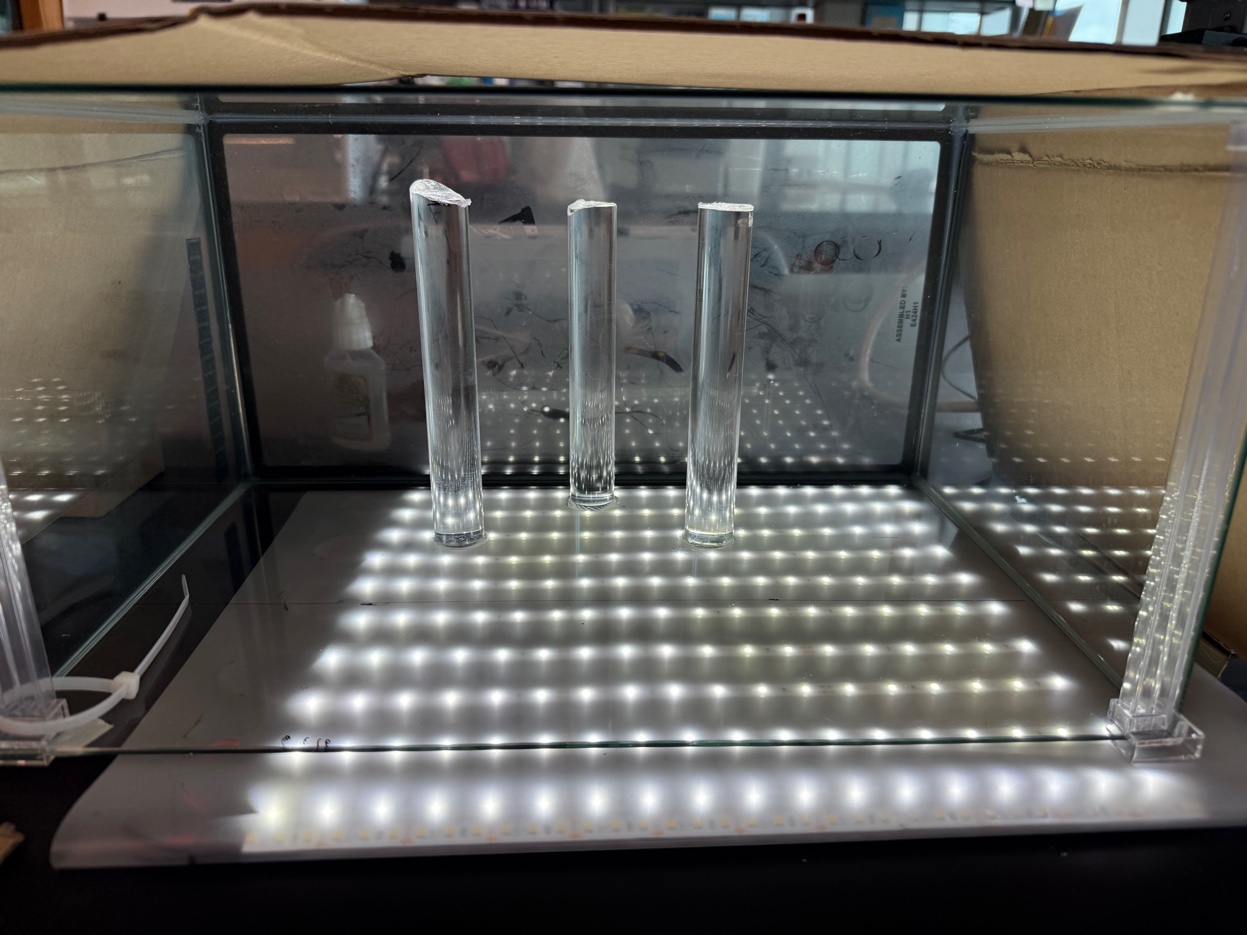
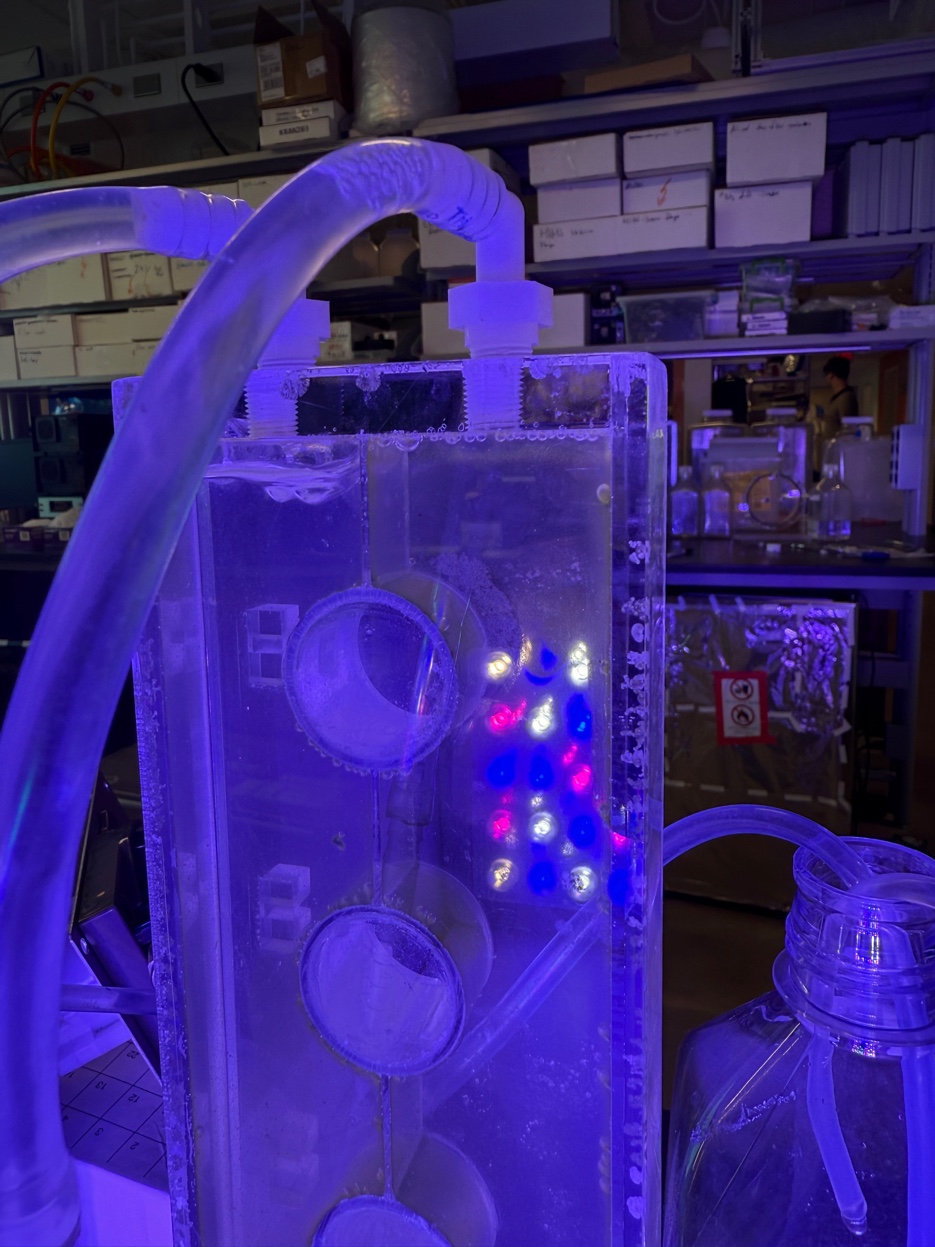
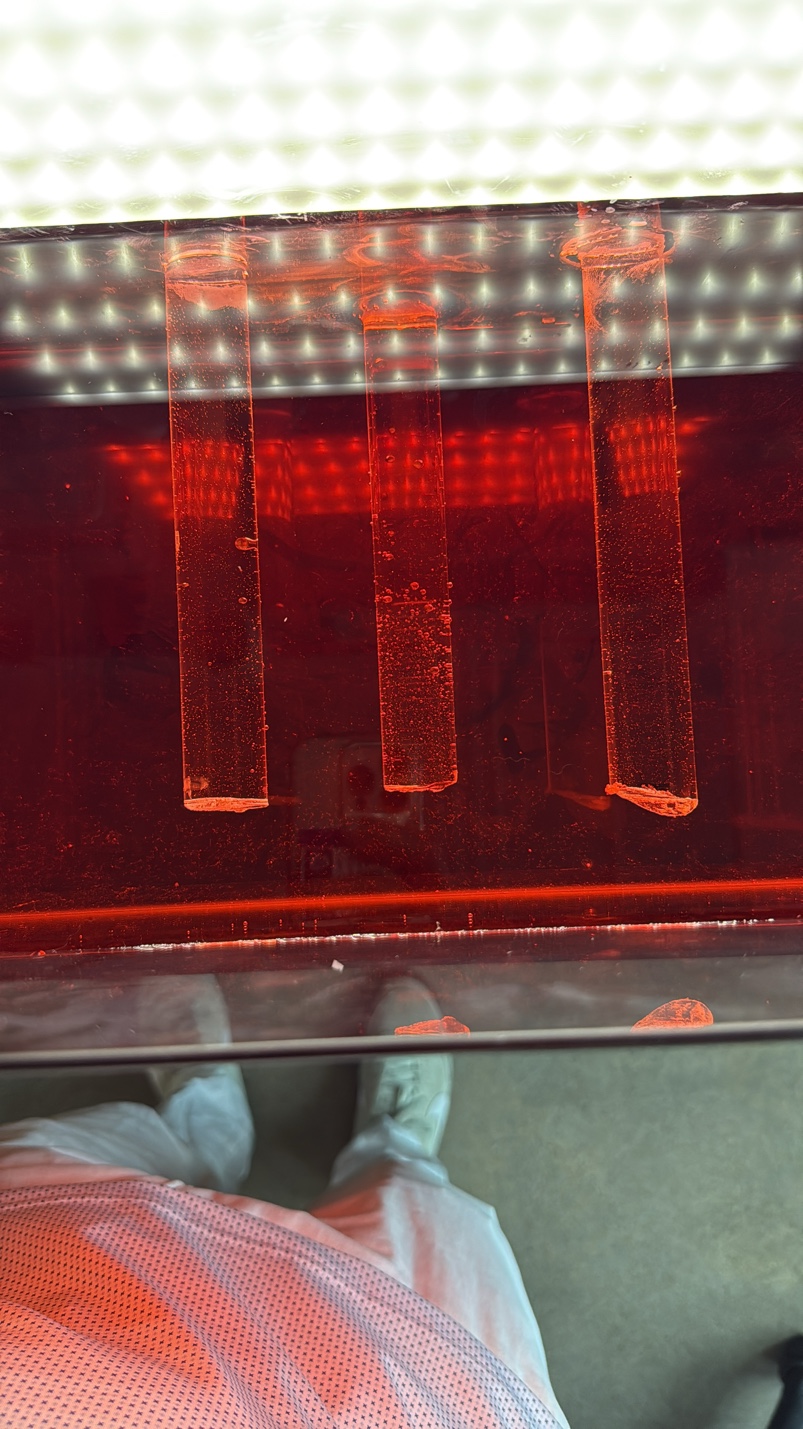
Light-guide rods with LED panel PBR prototype with multi-spectrum LEDs Light-guide rods illuminated in red spectrum Our prototypes at Rice University โ€” light-guide rods with LED illumination panel
Two-Stage Cultivation

Growth first. Stress second. Value always.

Our two-stage protocol maximizes both biomass yield and astaxanthin accumulation โ€” the key to unlocking multiple revenue streams from one biological system.

Stage 1 โ€” Green Phase

Rapid Biomass Growth

Chlorella vulgaris and Haematococcus pluvialis grow rapidly in nitrogen-replete conditions, consuming wastewater nutrients and fixing COโ‚‚. The algae remain green, doubling every 2โ€“4 days while treating wastewater at maximum efficiency.

Brewery wastewater provides all essential nutrients at zero feedstock cost โ€” nitrogen (30โ€“60 mg/L TN), phosphorus (5โ€“15 mg/L TP), and organic carbon (300โ€“800 mg/L COD).

Growth rate0.8โ€“1.2 dโปยน
COโ‚‚ toleranceUp to 15%
Doubling time2โ€“4 days
Nutrient sourceBrewery wastewater (free)
Light intensity200โ€“400 ฮผmol/mยฒ/s
Stage 2 โ€” Red Phase (Stress)

Astaxanthin Accumulation

Under nitrogen limitation and high light intensity, Haematococcus pluvialis shifts from green to red as it accumulates astaxanthin โ€” one of nature's most powerful antioxidants and our highest-margin product. Cells encyst and turn deep red, concentrating 3โ€“5% astaxanthin by dry weight.

Extraction via supercritical COโ‚‚ yields pharmaceutical-grade natural astaxanthin commanding premium prices over synthetic alternatives.

Astaxanthin content3โ€“5% dry weight
TriggerN-limitation + high light
Duration7โ€“14 days
ExtractionSupercritical COโ‚‚
Price (natural)$8,125/kg wholesale
Wastewater Treatment

Turning toxic effluent into treated water.

Brewery wastewater isn't a problem โ€” it's premium algal growth media in disguise. Our system removes pollutants biologically while saving breweries $150Kโ€“200K/year in disposal costs.

How algae treat wastewater

Microalgae directly uptake nitrogen and phosphorus as nutrients for growth. Heterotrophic bacteria in the culture consume organic matter (BOD/COD) symbiotically. Photosynthetic oxygenation supports aerobic decomposition. The result: clean water that meets discharge standards, with zero chemical additives.

Why brewery wastewater is ideal

Unlike dilute municipal wastewater, brewery effluent has extremely high nutrient concentrations โ€” precisely what microalgae need. This eliminates 70โ€“80% of feedstock costs compared to artificial growth media, turning a waste liability into a competitive advantage.

ParameterInletOutletRemoval
BOD4,593 mg/L45 mg/L 99.0%
COD4,280 mg/L125 mg/L 97.1%
Total Nitrogen380 mg/L19 mg/L 95.0%
Total Phosphorus48 mg/L0.8 mg/L 98.3%
TSS564 mg/L25 mg/L 95.6%

Data from lab-validated trials using Saint Arnold Brewing Company wastewater

Carbon Capture

Photosynthesis is the original carbon capture technology.

Microalgae fix COโ‚‚ 10โ€“50ร— faster than terrestrial plants, with no non-photosynthetic structures (roots, trunks) wasting captured carbon. Every kilogram of biomass we produce removes 1.83 kg of COโ‚‚ from the atmosphere.

Carbon credit pathway

Co-founder Manuja Dayanath (PhD, Monash University) is developing a certified carbon balance methodology to quantify COโ‚‚ sequestration โ€” addressing prior rejections of microalgae carbon credits by standards bodies like Verra. This unlocks recurring revenue from voluntary and compliance carbon markets projected to reach $93/ton by 2030.

6COโ‚‚ + 6Hโ‚‚O โ†’ light โ†’ Cโ‚†Hโ‚โ‚‚Oโ‚† + 6Oโ‚‚

1.83 kg

COโ‚‚ per kg biomass

5.5 t

COโ‚‚ per mยณ per year

4.53 t

COโ‚‚ fixed per year (18 PBRs)

8.8 t

COโ‚‚ avoided (incl. substitution)

Revenue Streams

Four products. Zero waste.

Unlike algae ventures that failed chasing a single commodity, AlgaZen stacks multiple high-margin revenue streams from every batch of biomass.

๐Ÿ”ด

Astaxanthin

Premium natural antioxidant extracted from H. pluvialis. 2โ€“5ร— more valuable than synthetic. Nutraceutical, cosmetic, and aquaculture markets.

$8,125/kg wholesale
๐ŸŒฑ

Biofertilizer

Residual biomass after astaxanthin extraction. Rich in nitrogen, phosphorus, and micronutrients. Organic agriculture market growing 10โ€“21% annually.

$26/kg
๐Ÿ“Š

Carbon Credits

Certified COโ‚‚ sequestration generates tradeable credits on voluntary and compliance markets. Price trajectory strongly upward through 2030.

$93/ton by 2030
๐Ÿงน

Wastewater Treatment

Service fee replacing brewery disposal costs. Each brewery saves $150Kโ€“200K/year โ€” we charge a fraction and still generate margin.

$200K/yr savings per brewery
Technology Comparison

Cheaper. Cleaner. More valuable.

TechnologyCost/ton COโ‚‚EnergyTreats WastewaterProduces RevenueScalability
AlgaZen Microalgae$45โ€“65Solar-poweredYes4 streamsHigh
Chemical CCS$150โ€“250HighNoNoMedium
Direct Air Capture$600โ€“1,000Very HighNoNoLow
Activated SludgeN/AHighYesNoMedium
Reforestation$15โ€“50NoneNoLimitedLand-limited
Scaling Plan

18 PBRs. $0.88M/year. Under 1-year payback.

Our first commercial-scale deployment: 18 flat-panel PBRs (1,000L each) producing 2.07 tonnes of dry biomass per year with an operating margin above 70%.

2.07 t/yr

Dry biomass produced

103.3 kg/yr

Astaxanthin extracted

504 mยณ/yr

Wastewater treated

4.53 t/yr

COโ‚‚ directly fixed

$0.88M/yr

Projected revenue

<1 year

Payback period

CAPEX: ~$0.61M (PBRs + ancillaries + scCOโ‚‚ extraction unit). OPEX: ~$0.18M/year. Operating margin: >70%. Additional value not modeled: wastewater treatment credits + COโ‚‚ utilization credits.

Next Steps

See it in action.

We're deploying our pilot system at Saint Arnold Brewing Company in Houston. Interested in partnering, investing, or learning more?

Get In Touch Back to Home